 A Lean Journey
The Stages of High Performance Teams: Understanding Tuckman’s Model
Teams are an essential part of organizational success, but as you may know from experience, a newly formed team rarely performs at its best immediately. Team development is a process that takes time and typically follows recognizable stages, transforming a group of strangers into a cohesive, high-performing team united by common goals.
Psychologist Bruce Tuckman introduced a widely accepted framework in 1965, famously known as “Forming, Storming, Norming, and Performing.” Later, he added a fifth stage called “Adjourning.” This model describes the path most teams take to achieve high performance.
The Five Stages of Team Development
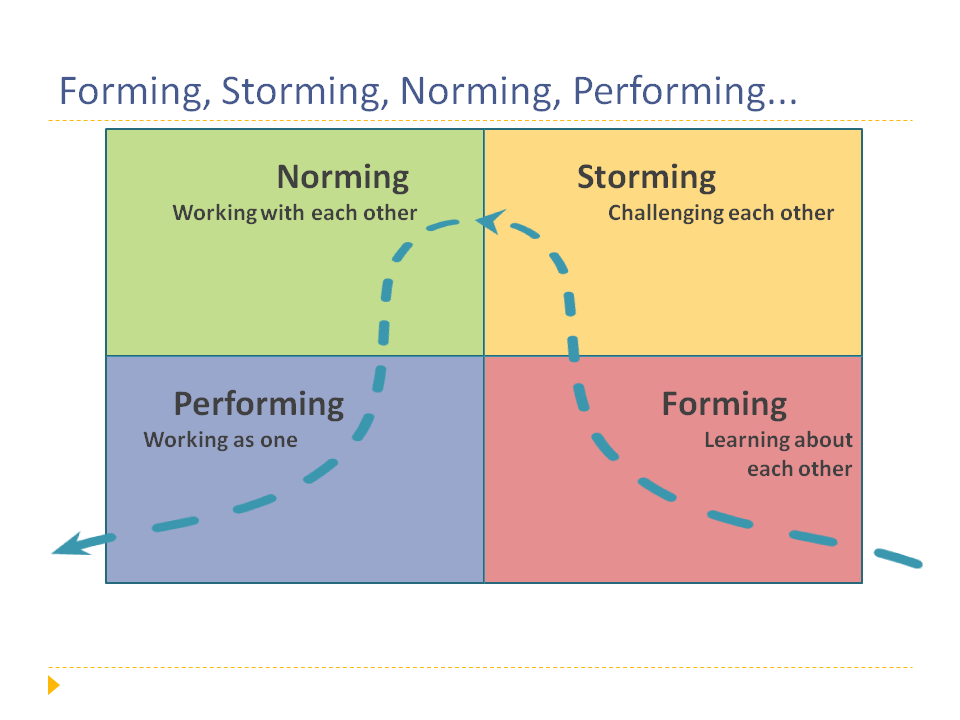
The following table summarizes Tuckman’s model:
Why Tuckman’s Model Matters
-
Clarifies team dynamics: Helps leaders understand the challenges and behaviors typical of each stage.
-
Boosts team effectiveness: Guides teams through conflicts toward smooth collaboration and productivity.
-
Improves leadership focus: Allows leaders to adapt their style to meet the team’s needs at each stage—from directing to delegating.
-
Drives high performance: Teams that successfully navigate these stages deliver stronger results, innovation, and employee satisfaction.
Final Thoughts
Every group has the potential to become a high-performance team, but success requires understanding and guiding natural team dynamics. By applying Tuckman’s model, leaders can help their teams move smoothly through forming, storming, norming, performing, and adjourning—unlocking the true power of collaboration and driving lasting success.









Leave a Comment
Your email address will not be published. Required fields are marked with *