 A Lean Journey
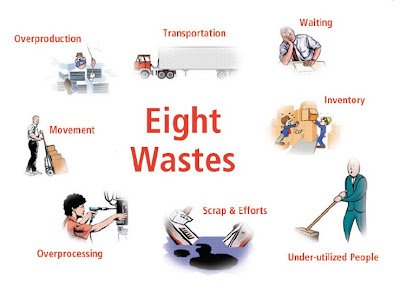
Acronyms are powerful tools for remembering important concepts, objectives, and processes. In Lean manufacturing, one of the most effective acronyms is DOWNTIME, which represents the Eight Wastes. These wastes highlight the distinction between value added vs non-value added activities and provide a framework for process improvement.
The Eight Wastes: DOWNTIME Acronym
The term DOWNTIME serves as a memory aid to identify the eight
categories of waste that exist in any manufacturing or
service-oriented process:
These wastes collectively create delays, add costs, and reduce customer satisfaction—hence the fitting acronym DOWNTIME.
Value Added vs Non-Value Added Activities
In Lean manufacturing, every step in a process can be classified
into one of two categories:
-
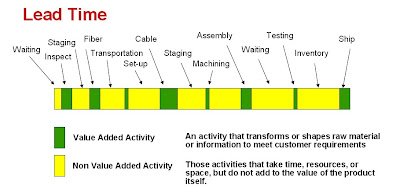
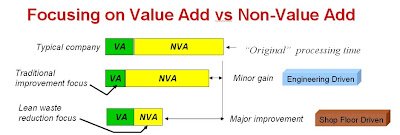
Value Added Activity (VA): Work that directly creates value for the customer—something they are willing to pay for.
-
Non-Value Added Activity (NVA): Work that consumes time and resources but does not add value from the customer’s perspective.
Research shows that in many organizations, 60–80% of process steps are non-value added activities, meaning most of the time, money, and effort goes into things the customer does not value.
Why Eliminating the Eight Wastes Matters
When processes are filled with waste, the total lead time—the time it takes
to deliver a product or service—becomes much longer than necessary.
By identifying and eliminating the Eight Wastes, organizations can:
-
Shorten lead times and deliver faster to customers.
-
Lower operating costs by reducing rework, inventory, and delays.
-
Increase capacity to handle more demand without adding resources.
Boost customer satisfaction by focusing on quality and value.
Embedding Lean Thinking into Company Culture
The DOWNTIME acronym is more than a teaching tool—it is a practical way to build
awareness of waste across teams.
Embedding Lean principles into company culture shifts
the mindset from traditional “keep busy”
work to one focused on continuous process improvement.
Leaders play a critical role in helping employees understand the difference between value added vs non-value added work and empowering them to reduce the wastes in their daily activities. When organizations invest in developing their people, the impact on efficiency, morale, and profitability can be profound.
Final Thoughts
The Eight Wastes of Lean manufacturing, remembered through the DOWNTIME acronym, highlight how much of our time is consumed by non-value added work. By applying Lean principles and focusing on process improvement, companies can reduce waste, respect their employees’ time, and deliver greater value to their customers—driving both growth and sustainability.





Leave a Comment
Your email address will not be published. Required fields are marked with *