 A Lean Journey
 |
| Source |
Over
the past few years, a lively debate has emerged about talent management and the
skills and competencies future employees need to meet current and future market
needs.
When
engineering students enter the workforce, they cannot correlate and apply the
theoretical knowledge they acquired during their studies to practical contexts
due to a lack of professional competencies. That leads to more action-oriented
and experiential learning.
To
equip students and employees with the skills they need, here we will discuss
how you can assist students in getting the lean lessons in Manufacturing
Sector.
What Is Lean Manufacturing?
To
help students get lean lessons in the manufacturing sector, it is important to
provide them with a proper understanding of what lean manufacturing is.
Lean
manufacturing is a philosophy that is used to improve the efficiency and effectiveness of any
process or system by reducing waste and improving quality. It also aims at
reducing costs by eliminating non-value-added activities.
In
1991, Womack et al. coined the term Lean
Production.
The premise
was simple: doing more with less. An overview of 5 principles for establishing and sustaining a lean production
environment was provided by Womack et al. They are:
- Assess the value of the product or
service from the customer’s perspective - Separate non-value-adding activities
(wastes) from value-adding activities (stream of activities involved in
design-to-market) - Maintain a continuous flow of activities
that add value - Put the customer at the center of the
production process by implementing a pull system. - Continuously improve to achieve
perfection.
Many
companies all over the world, including Toyota, Nike, and Intel, have practiced
lean manufacturing. The focus of lean manufacturing is to eliminate non-value
added activities from the production process.
Lean
Lessons in Manufacturing Sector
Here’s
how you can assist students with learning lean in the manufacturing sector.
Identify the problem
 |
| Source |
If
you want your students to produce valuable results, you need to tell them:
● How to identify what is impeding
the process.
● What’s going well or what’s not?
● What can they do to improve it?
It
may be that one person’s work takes an excessive amount of time or that the
process is unclear, constantly requiring clarification. This may be due to a
process or person being too dependent on another.
An
analysis of data in connection with the process can assist in identifying
roadblocks. Students can determine whether their improvements are effective by
analyzing data points such as time, ROI, output, and output.
Find a solution to the problem
Once
the problem is identified, analyze and define it based on data collected from
interviews and observations. Using this data, create a hypothesis — a theory
based on what students have observed— and test it by trying out different
solutions until one works best.
The
use of technology ― especially automation tools ― can often help solve
efficiency problems. Several regular tools students use already have automation
built in. They may not be utilizing it to the fullest extent possible.
Tell
them to take a closer look at the tools they are using, and see how they can
improve them; or, if the situation warrants it, consider an investment in industrial automation
certification for a better understanding.
Refine process and share
 |
| Source |
should instruct your students to share their formalized process with their team
once it has been documented. However, they shouldn’t stop looking for ways to
improve their processes just because they have completed these steps.
Kaizen, a synonym for “change for the better,” is a key
element of lean management. It involves everyone working together to achieve
continuous improvement.
Continue
to monitor the team’s performance and refine it based on feedback. Changes
around the process may also need to be fine-tuned over time as they impact the
overall flow.
Analyze the process to find the
pain points
Examine
the weak points in the current process to discover where improvements are
needed. Locate bottlenecks and steps that require multiple steps to complete
just one part of a process. Determine which areas need to be redone on a
regular basis or where different people are doing the same work.
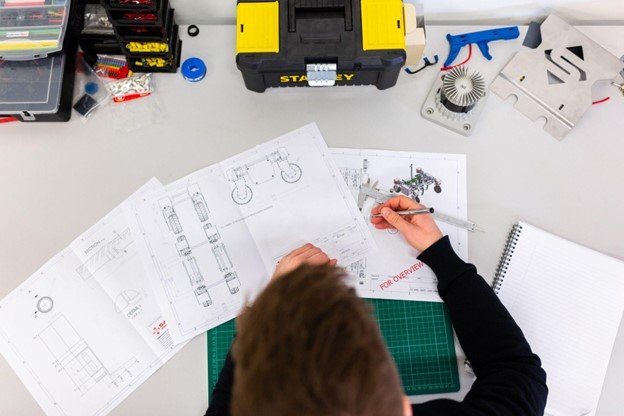
Take it slow and easy
 |
| Source |
The
deeper you dive into a problem, the more paths for improvement you will
uncover. If you see all of the potential opportunities for improvement and
intervention, it’s very easy to get distracted from what you set out to
accomplish. Maintain your focus on your goal and keep your goal at the
forefront of your mind.
Maintaining
rigor (being thorough and accurate) is essential for achieving sustainable,
meaningful improvements. For what appears at first glance to be an “easy
fix” to be truly effective, it is vital to establish a new way to do
things.
Conclusions
In
this article, we have provided an opportunity for students in industrial and
systems engineering to learn about lean in the manufacturing section. Companies
of all kinds can benefit from lean management – not just manufacturing
companies. The lean culture promotes problem-solving and continuous improvement
in an organization when it is implemented correctly.

About the Author: After the cooperation with the different manufacturers
Amir Jones decided that field service engineering services are efficient for
the nowadays industry. Moreover, it is very interesting to write about it. So,
he helps to clarify with the basic principles and details of the process in
such a way today, enjoying the process of writing and assisting people.









Leave a Comment
Your email address will not be published. Required fields are marked with *