 A Lean Journey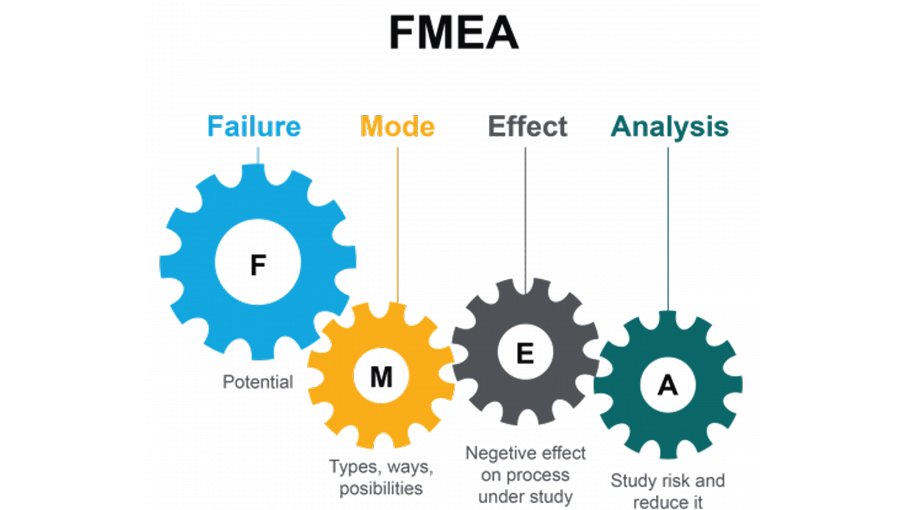
Failure modes and effects analysis (FMEA) is a step-by-step approach for identifying all possible failures in a design, a manufacturing process or assembly process, or a final product or service. “Failure modes” means the ways, or modes, in which something might fail. Failures are any errors or defects, especially ones that affect the customer and can be potential or actual. “Effects analysis” refers to studying the consequences, or effects, of those failures.
- A tool used to evaluate potential failure modes and their causes.
- Prioritizes Potential Failures according to their Risk and drives actions to eliminate or reduce their likelihood of occurrence.
- Provides a discipline/methodology for documenting this analysis for future use and continuous process improvement.
This analytical technique is used by manufacturing / engineering teams as a means to assure that, to the extent possible, potential failure modes and their associated causes or mechanisms have been considered and addressed. Due to its systematic approach it has a number of benefits for process and product development and improvement.
- Identifies potential “manufacturing or assembly” process failure modes.
- Identifies potential “product related” process failure modes.
- Assesses the potential customer effects of the failures.
- Identifies operator safety concerns.
- Identifies process variables on which to focus controls for occurrence reduction / elimination or detection of the failure conditions.
- Develops a ranked list of potential failure modes ranked according to their affect on the customer, (both external & internal), thus establishing a priority system for corrective actions.
- Feeds information on design changes required and manufacturing feasibility back to the design community.
- When you are designing a new product, process or service
- When you are planning on performing an existing process in a different way
- When you have a quality improvement goal for a specific process
- When you need to understand and improve the failures of a process
- Create a team of employees who have collective knowledge or experience with the system, design or process and customer needs. This includes employees with experience in customer service, design, maintenance, manufacturing, quality, reliability, testing and sales.
- Identify the scope of the system, design, process, product or service. Define the purpose of the system process, service and design.
- Break down a system, design or process into its different components.
- Go through system, design or process elements to determine each possible issue or single point of failure.
- Analyze the potential causes of those failures as well as the effects the failures would have.
- Rank each potential failure effect based on decided criteria such as severity, likelihood of occurrence and probability of being detected. Organizations can use a risk priority number to score a system, design or process for risk potential.
- Determine how to detect, minimize, mitigate and solve the most critical failures. This helps keep failure effect risks low by creating a list of potential failures and corrective actions to take.
- Revise risk levels as needed.
An effective FMEA identifies corrective actions required to prevent failures from reaching the customer and to assure the highest possible yield, quality and reliability. Taking action transforms the FMEA from a paper chase into a valuable tool. By taking action in preventative means you are adding value to the customer which can be a competitive advantage.









Leave a Comment
Your email address will not be published. Required fields are marked with *