 A Lean Journey
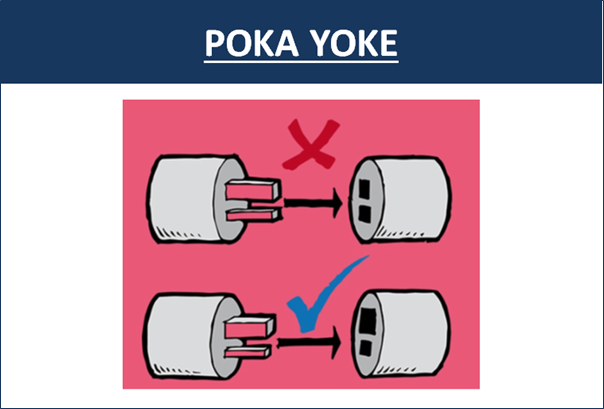
Poka-yoke
or mistake-proofing is the use of process design
features to facilitate correct actions, prevent simple errors, or mitigate the
negative impact of errors. It is essentially used to make the process easier. To assess how effective your solution
is, you must look at three factors: the power of the mistake-proofing solution,
whether it can be overridden, and if it is sustainable over time.
The first factor is to look at the mistake-proofing power. The power of
the mistake-proofing solution is a measure of how well the solution fulfills
the ultimate objective of mistake-proofing: to make it impossible to make
mistakes. There are three tips for improving the power of the solution:
- The first tip focuses on the
trigger of the solution. Using an automatic trigger (forced control
or shutdown) instead of an operator dependent or discretionary one
(warning or sensory alert) improves the power. - The second power rating tip focuses
on the type of outcome. The power of the solutions with prevention
outcomes is significantly greater than those with detection outcomes.
When possible, focus on prevention, not detection, outcomes. - The third power rating tip involves
the type of effect selected. The power of the mistake-proofing
solution becomes greater and greater as you move up the effects column.
Forced control is usually better than a shutdown effect, shutdown is
better than warning, and warning is better than sensory alert.
The second
factor used to determine the effectiveness of a mistake-proofing solution is to
assess how well it is defended against being overridden. Solutions can be
overridden if their trigger can be ignored, if a device can be disabled, or by
a malicious act.
The third and
final factor is to assess whether the solution is sustainable over time.
There are three questions to consider for assessing the sustainability of
the solution:
- Did the interim solution become
“permanent?” Many organizations fall into the trap of
allowing an interim solution to become permanent. However, interim
solutions are like band-aids. They are short-term fixes not intended
to be robust. To keep interim measures from becoming permanent
solutions, identify the obstacles for developing or implementing permanent
solutions, develop a time-based plan, and follow through. - Can practices regress back to the
“old ways?” Fight off the urge to regress. To help do
this, sell the benefits of the “new” way and audit performance
for compliance. - Are there service life issues? Make
sure the right materials are selected. If shelf life is a concern,
use first-in, first-out inventory control. Check frequently at first
to make sure the solution is working effectively and as planned. Then use
data to set the correct preventive maintenance frequency.
The
effectiveness of a poka-yoke should be judged after the performance of the
solution for a period of time. Make sure the poka-yoke is delivery the
results you expect. If the solution is not effective, then try another
solution by following the guidelines above.









Leave a Comment
Your email address will not be published. Required fields are marked with *